Nvidia’s $20 Billion Groq Deal Could Change the Future of AI Chips Forever
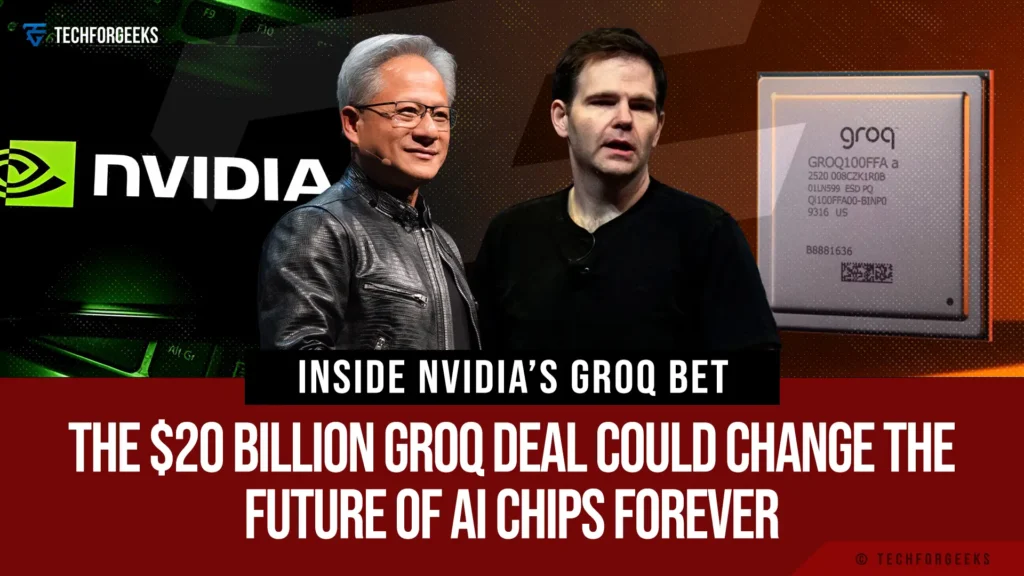
The artificial intelligence chip sector could be poised for its next chapter after reports indicated that Nvidia has struck a massive deal with AI chip startup Groq, the value of which may be as much as $20 billion. Whether as a licensing deal, asset acquisition, executive hire, or partial takeout, academically speaking, it is such: Groq + Nvidia = a turning point in the competitive landscape for AI hardware.
With demand for AI inference chips skyrocketing as generative AI capabilities pretend to unfold, this Nvidia-Groq agreement is a reminder that strategic alliances may trump traditional mergers and acquisitions.
Who Is Groq and Why Does It Matter?
Groq, an AI chip startup staffed by ex-Google engineers who worked on TPU, is known for its Language Processing Unit (LPU) architecture. Unlike traditional GPUs, Groq’s chips are built for:
- Ultra-low latency AI inference
- Deterministic performance
- Energy-efficient large language model execution
Groq made headlines by showcasing record-breaking inference speeds for large language models, making it a real threat to Nvidia in one of the fastest-growing AI segments.
Why Nvidia Reportedly Struck a Deal With Groq
Nvidia already rules the AI training with its GPUs, but the AI inference is emerging as a new battleground. The reasons might be: Nvidia could have several strategic needs for Groq, according to industry reports.
1. Exploding Demand for AI Inference
As more AI models shift from training to actual usage, companies are in need of faster, cheaper, and reliable inference hardware.
2. Complementing Nvidia’s GPU Ecosystem
Groq’s inference-first architecture could complement Nvidia’s GPUs rather than replace them, strengthening Nvidia’s end-to-end AI platform.
3. Preventing a Competitive Threat
Some analysts believe the deal is a “catch and kill” strategy to ensure Groq’s technology does not fall into a competitor’s hands.
4. Talent and Leadership Acquisition
NVIDIA is possibly hiring some of Groq’s top leaders, including its CEO, indicating the worth of its human resources as much as the technology itself.
Licensing, Assets, or Acquisition? What’s Really Happening
While recent headlines have “Nvidia to buy Groq for $20 billion” as clickbait, there are other reports that state:
- Nvidia may be licensing Groq’s AI chip technology.
- The agreement may involve certain assets, not the entire firm.
- Groq could survive as an operational business that’s aligned strategically with Nvidia.
This hybrid approach allows Nvidia to obtain cutting-edge technology without the full regulatory and integration risks associated with a complete acquisition.
What the Nvidia–Groq Deal Means for the AI Chip Industry
A New Phase of AI Chip Consolidation
If confirmed, this would mark Nvidia’s biggest-ever deal and signal that the race to develop an artificial-intelligence chip is moving into a more intense phase of consolidation.
Increased Pressure on Rivals
Rivals such as AMD, Intel and AI startups now have to contend with a more formidable Nvidia ecosystem that combines both training and inference expertise.
Faster Enterprise AI Adoption
Better inference chips could help cut costs and latency for AI services, in turn accelerating the adoption of these technologies across industries.
Why This Deal Matters Beyond the Price Tag
The $20 billion valuation isn’t only about money; it signifies:
- The value of AI inference strategies.
- Nvidia’s ambition to own the entire AI stack.
- The growing gap between AI chipmakers vs the challengers
And whether Groq is acquired outright or swallowed strategically, its technology could soon be found in Nvidia’s next-generation AI platforms.
Final Thoughts
Nvidia’s reported deal to buy Groq marks a defining moment in AI hardware history. It’s a demonstration that the future of AI isn’t only bigger models, but faster, smarter, and more efficient execution.
With demand for AI continuing to skyrocket, such partnerships could end up deciding who owns the infrastructure for the next decade of artificial intelligence, by way of which AI accelerators get installed in the world’s data centres.